
7 Mistakes to Avoid When Redesigning Your Living Room
Living Room Design Tips from a Tampa Bay Interior Designer
The living room is where your family hangs out, where guests are welcomed, and everyday life takes place.
Because it is one of the most important spaces in your home, and also likely the most visible, you want it to be right. Small decisions can have a significant impact on how the space looks, feels, and functions.
If you are planning a living room remodel, updating your furnishings, or considering a larger renovation, here are seven common living room design mistakes to avoid.
1. Buying Furniture Without a Plan for the Entire Room
One of the most common mistakes homeowners make is purchasing pieces one at a time without considering how the room will come together as a whole.
While each piece may be beautiful on its own, the final result often feels disconnected, or worse, doesn’t serve the overall needs of the space. A thoughtful living room design begins with a plan for the entire space before individual selections are made. This way you know what you are shopping for and can purchase the right pieces in the right colors and sizes. This leads me to the second tip…
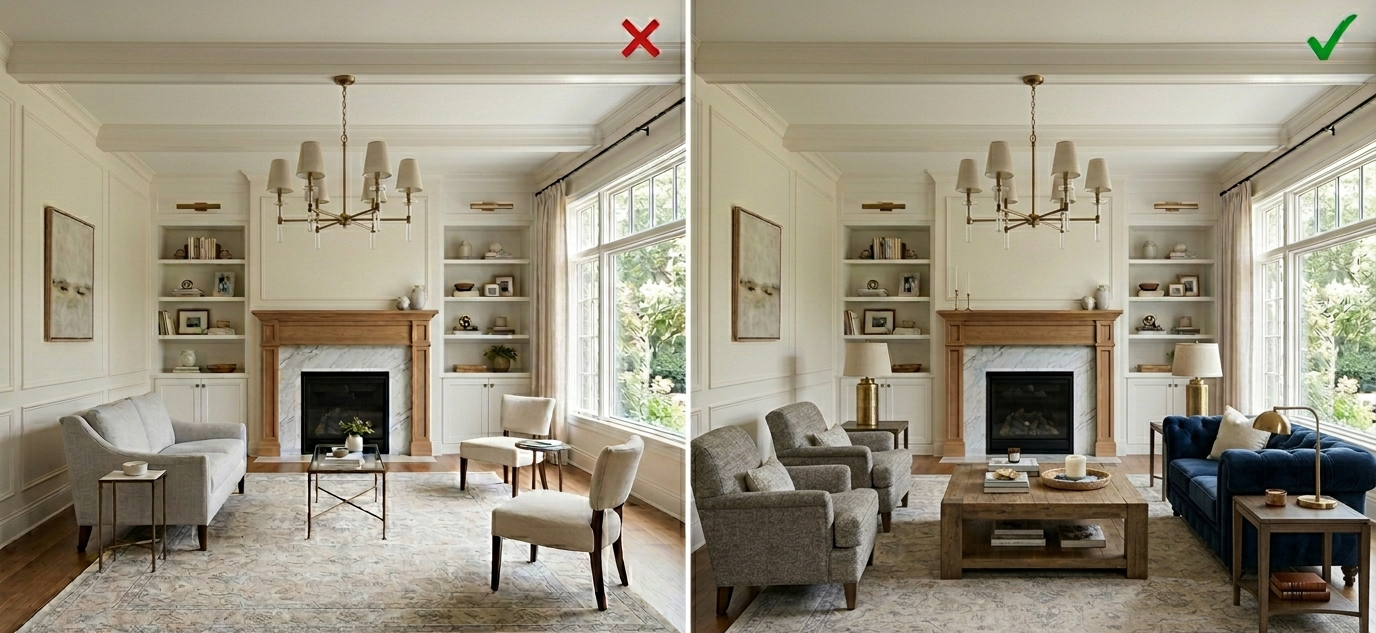
2. Choosing Furniture That Doesn't Fit the Space
Furniture that is too large can make a room feel crowded, while furniture that is too small can leave it feeling unfinished.
Scale is one of the most important elements of good interior design. The right pieces should feel proportional to both the room and one another, creating a balanced and comfortable environment. A few quick suggestions: a) Make sure the rug you choose is big enough for all the furniture to at least have the front legs on it. Your rug shouldn’t be an island in the middle of the furniture. b) Paths of travel need to be 36 inches, so don’t stuff more furniture into the room than can be comfortably navigated around. c) Avoid having one piece of furniture that is way smaller or way larger than the rest.
3. Ignoring the Design of Adjacent Rooms
Many living rooms are visually connected to kitchens, dining rooms, entryways, or hallways. Yet homeowners often design each room independently.
A successful living room renovation considers the surrounding spaces as well. Finishes, colors, materials, and architectural details should feel connected, so the home flows naturally from one room to the next. Your kitchen and fireplace, for example, should speak the same language, and both should connect to the style of your home. At Teresa Cannon Design, we have had more than one client realize their inspiration photos for their living room would not coordinate with their current kitchen. In one case we were able to adjust the living room makeover to better fit the current style of their home, and in the other we increased the scope of the project to include a kitchen renovation!
4. Not Including Enough Lighting
Relying solely on recessed lights or a ceiling fixture is one of the quickest ways to create a flat, uninviting room.
A well-designed living room includes multiple layers of lighting, such as table lamps, floor lamps, sconces, or decorative fixtures. Layered lighting creates warmth, adds dimension, and allows the space to function throughout the day.
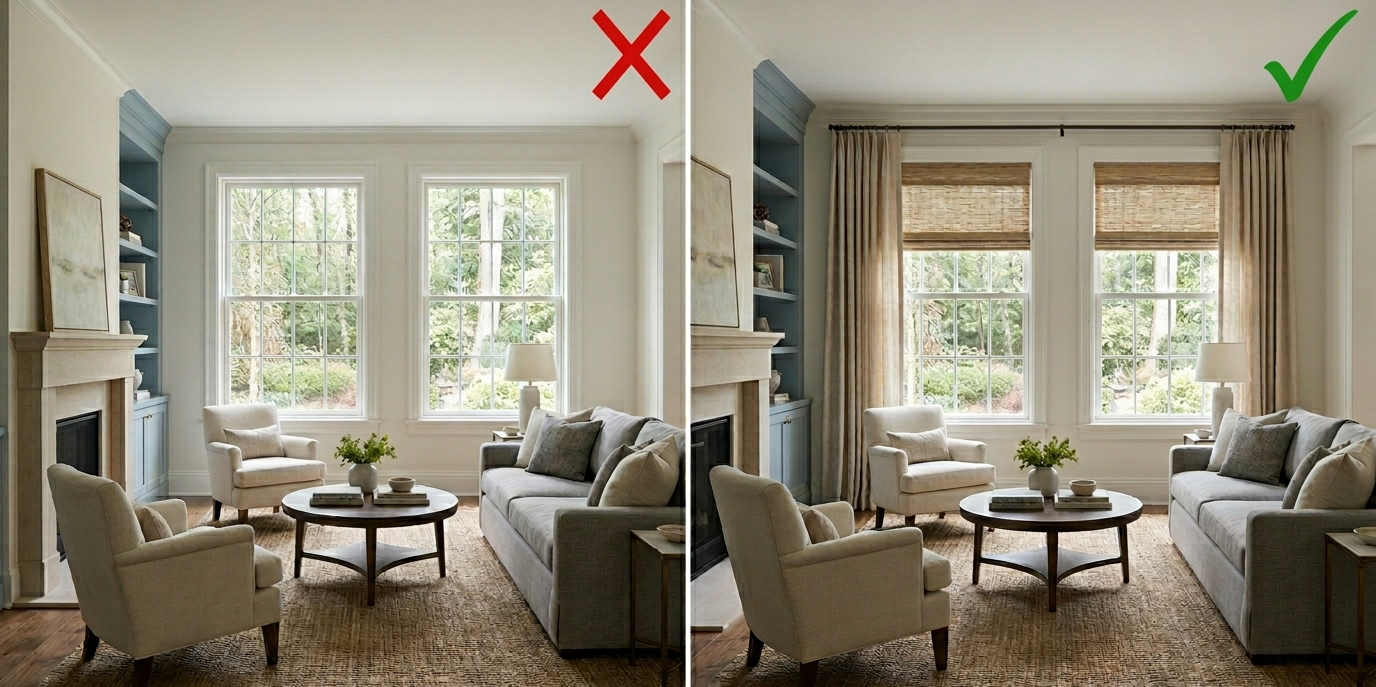
5. Overlooking Window Treatments
Window treatments are often treated as a finishing touch, but they have a major impact on the overall design and should be accounted for at the start.
Drapery and shades provide privacy and light control, but they also add softness, texture, and height. When window treatments are undersized or hung incorrectly, even a beautifully furnished room can feel incomplete. Be sure to budget for this line item when planning your living room design.
6. Forgetting Texture and Layering
Some living rooms have all the right furniture but still feel flat. The missing ingredient is often texture.
Have you ever wondered why those House Beautiful or Architectural Digest living rooms look so great? Natural materials, textiles, wood finishes, woven elements, and layered fabrics create depth and interest. These details help a living room feel warm, inviting, and thoughtfully designed, not just filled with nice furniture pieces. You may be drawn to marble, or beige boucle, or another material, but don’t fall into the trap of choosing that beloved material for too many items in your home. When selecting your furnishings and accessories, vary the materials and fabrics used for a more interesting and designer result.
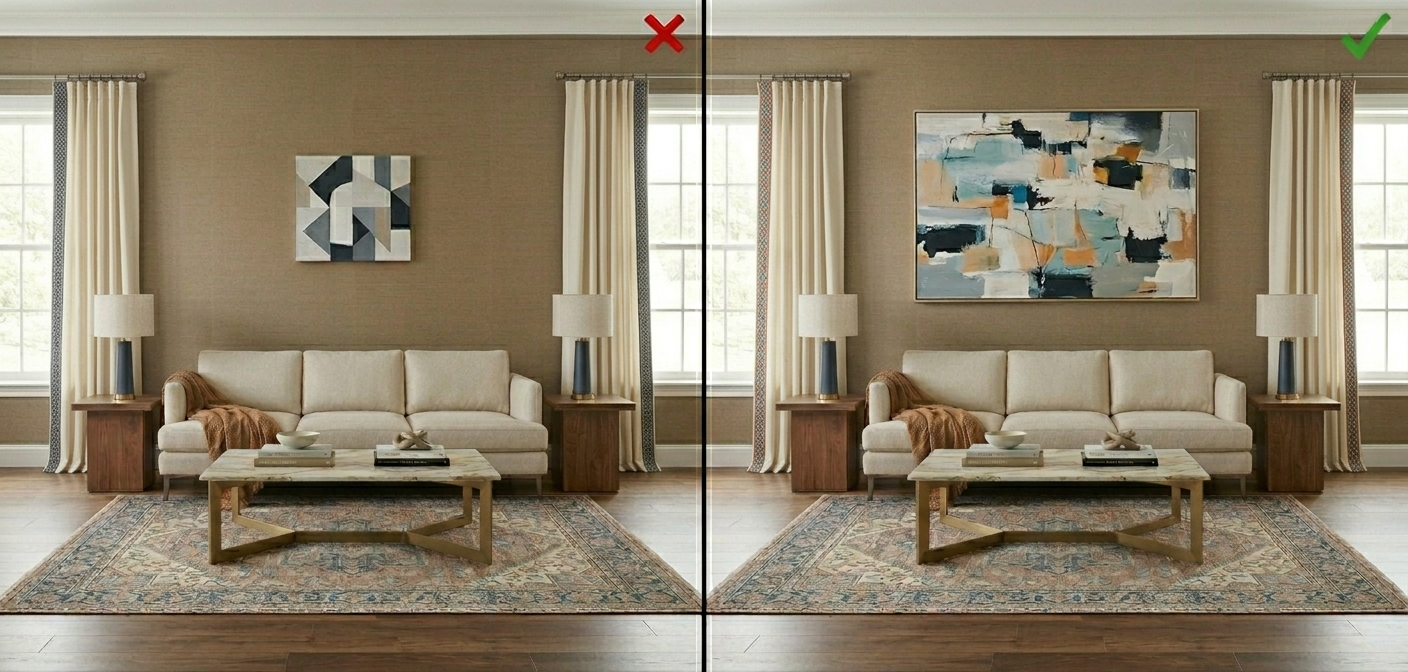
7. Choosing Art That Is the Wrong Size or Hung Incorrectly
Artwork should feel connected to the furnishings around it, not like an afterthought.
Art that is too small can get lost on a large wall, while art hung too high often feels disconnected from the room. Properly scaled and positioned artwork helps anchor the space and creates a more polished, finished look. Also, be sure not to hang artwork too high. While there are cases for hanging it higher, most of the time a good rule of thumb is to have the center of the artwork, or the focal point of the piece, about 60” off the ground. For wall decor placed over a sofa or other furniture piece, aim for no more than 8 inches above the top of the furniture.
A beautiful living room is about more than selecting attractive furniture. It is about creating a space that feels cohesive, comfortable, and tailored to the way you live.
Whether you are furnishing a single room or planning a larger home renovation, thoughtful decisions made early in the process can help you avoid costly mistakes and create a living room that feels timeless for years to come.
If you are ready for living room makeover that feels fully finished and perfect for your home, Teresa Cannon Design would love to help. Reach out through our CONTACT FORM to start the process.
Would you like to stay notified when a new blog post goes live? CLICK HERE to send me your name and email.
Luxury Interior Design Services based in North Pinellas County and serving the Greater Tampa Bay area.